
Introduction:
Are you tired of the same old gym routine? Do you want to maximize your training results while also improving your performance in everyday activities? If so, it’s time to explore the world of functional training. Unlike traditional weight lifting, functional training focuses on developing strength and skills that directly translate to real-life movements and tasks. In this blog post, we will delve into why functional training is a better choice for overall fitness compared to traditional weight lifting.
Functional Training: Training for Real-Life Movements
Functional training is all about training movements, not just muscles. It aims to improve your ability to perform daily activities efficiently and with reduced risk of injury. Unlike traditional weight lifting, which often focuses on isolating individual muscles, functional training emphasizes compound movements that engage multiple muscle groups simultaneously.
For example:
a. Squat vs. Leg Press: While the leg press machine primarily isolates the muscles of your legs, squats are a functional movement that engages your entire lower body, including the core. Squats mimic movements like sitting down and standing up, making them more applicable to everyday life.
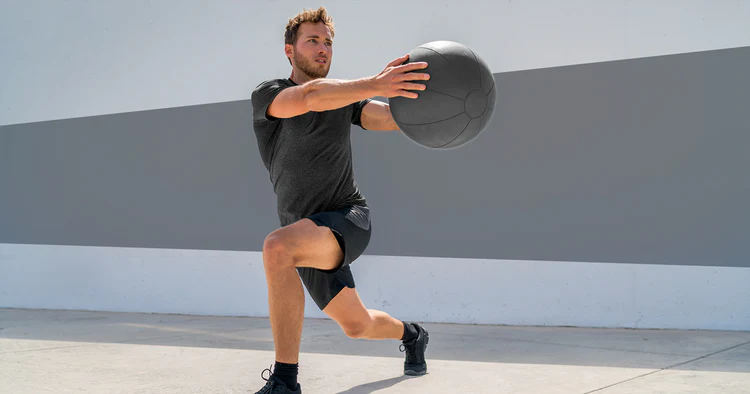
b. Lunge vs. Leg Extension: Leg extensions target the quadriceps muscles in isolation, whereas lunges engage not only the quads but also the glutes, hamstrings, and stabilizer muscles. Lunges replicate movements involved in walking, climbing stairs, and maintaining balance.
Building Functional Strength and Skills
Functional training not only helps you get stronger but also improves your overall movement skills and coordination. By training your body to work as a whole unit, you develop functional strength that carries over to real-life activities.
a. The Carry Pattern: The carry pattern is a fundamental functional movement that involves picking up and carrying objects. Training this pattern helps improve grip strength, core stability, and overall body strength. It prepares you for tasks like carrying groceries, lifting heavy objects, or even playing with your kids.
b. Stability and Balance: Functional training often incorporates exercises that challenge stability and balance. By using tools like stability balls, balance boards, and single-leg exercises, you improve your proprioception and develop better overall stability, reducing the risk of falls and injuries.
Efficiency and Practicality
Functional training offers a time-efficient and practical approach to fitness. Rather than spending hours isolating each muscle group, you can achieve a full-body workout by incorporating compound movements and functional exercises into your training routine.
Additionally, functional training often involves using a variety of equipment such as resistance bands, medicine balls, kettlebells, and bodyweight exercises. This versatility allows you to train anywhere, whether you’re at the gym, home, or outdoors.
Conclusion:
While traditional weight lifting has its merits, functional training takes fitness to another level by focusing on movements that improve strength, coordination, and skills needed for everyday life. By engaging multiple muscle groups and training for real-life activities, functional training provides a more holistic approach to fitness. So, if you’re looking for a training method that not only enhances your physique but also empowers you in your daily tasks, it’s time to give functional training a try and unlock your true functional potential.